
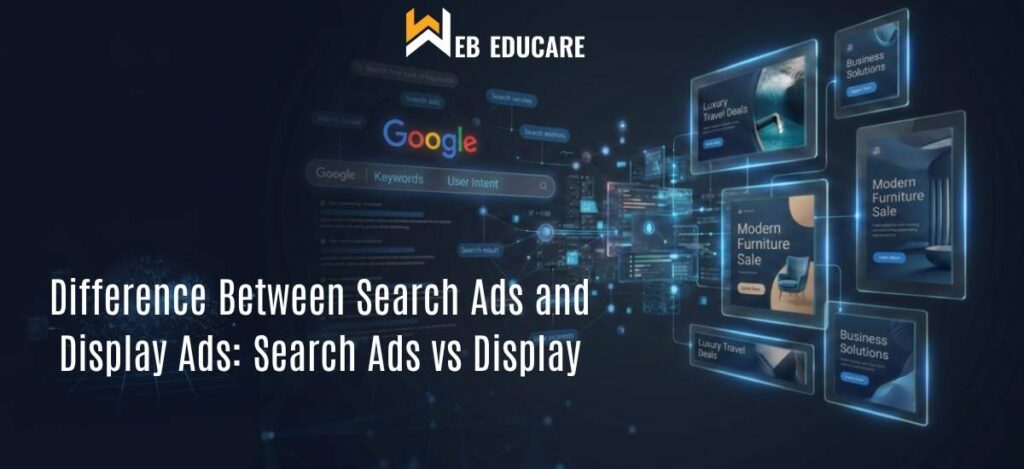
When comparing search ads vs. display, the goal is simple: spend wisely and achieve results. Businesses using digital marketing services in Kolkata must understand how each format supports a different stage of the customer journey. Search ads meet people who are already looking for a solution. Display ads reach users while they browse websites, apps, videos, or content. Therefore, the right choice depends on intent, timing, budget, and campaign goals.
Read More: What Is Google Ads and How Does It Bring Customers to Your Website?
Difference Between Search Ads and Display Ads in Google Ads
Search ads appear when someone enters a relevant query into Google. A trusted Google Ads agency Kolkata can use this clear intent to generate inquiries, phone calls, bookings, and sales from people already considering action. Google Ads uses a pay-per-click model, where advertisers select keywords, write ads, set budgets, and compete for suitable placements. Still, successful performance also depends on relevance, landing page quality, targeting, bidding, and user experience overall.
Why search ads convert well
Search ads convert well because they respond to an existing need. With properly planned digital marketing services in Kolkata, businesses can target high-intent searches and guide customers towards a call, inquiry form, booking, or purchase.
For example, someone searching for an SEO provider is more likely to act than a person viewing an unrelated website. Search advertising captures current demand, while display advertising creates interest before that demand becomes active.
Best uses for search campaigns
Search campaigns suit lead generation, service inquiries, local searches, bookings, and direct purchases. An experienced ad agency in Kolkata can organize campaigns around relevant keywords, locations, devices, schedules, and customer needs without wasting the budget.
Competitive keywords can increase costs, so businesses should avoid targeting every possible term. Negative keywords, suitable match types, persuasive copy, conversion tracking, and regular optimisation can reduce wasted spending and improve the quality of leads.
Search Ads vs. Display: How Display Ads Work
Display ads are visual messages shown across websites, apps, videos, and digital placements. Businesses investing in digital marketing services in Kolkata can use them to improve visibility, introduce offers, and support marketing objectives over time. These advertisements may include images, logos, short messages, product visuals, and action buttons. Their visual format makes them useful for introducing a brand, promoting an offer, or reminding visitors about a business they already explored.
Why do display ads support awareness?
Not every customer is ready to purchase immediately. An advertising agency in Kolkata can use display campaigns to build familiarity and keep a business visible while people compare options, research solutions, or temporarily delay action. Remarketing is one of the strongest uses of display advertising. It reconnects with people who visited a website but did not call, submit a form, or purchase, giving the brand another chance to earn attention.
Best uses for display campaigns
Display campaigns work well for launches, seasonal offers, events, remarketing, and brand recall. Through digital marketing services in Kolkata, businesses can introduce themselves to audiences, communicate visually, and support search, social media, and content campaigns.
Display traffic may not produce immediate leads at the same rate as high-intent search traffic. However, it still creates recognition, increases touchpoints, and influences later searches when clear visuals and focused audience targeting are used.
Difference Between Search Ads and Display Ads
The simplest way to compare both formats is to match each one with its purpose. An online marketing agency in Kolkata may assess intent, placement, creative style, timing, and campaign goals before recommending the mix.
- Active or passive
- Search or websites
- Leads or awareness
- Text or visuals
- Now or later
If immediate response is the priority, search is usually the better starting point. When awareness, repeated exposure, or retargeting matters more, display becomes the stronger supporting layer and can influence customers before they actively search.
When to Use Search Ads vs. Display
The difference becomes clearer when the campaign type matches the customer journey. Search should support urgent needs and measurable actions, while display should build visibility, maintain recognition, and reconnect with users who previously showed interest.
Use search ads when:
- Fast lead generation
- Urgent service demand
- Calls and bookings
- High-intent keywords
- Conversion-ready pages
When choosing search, a Google Ads agency Kolkata can focus on relevant locations, operating hours, strong commercial terms, and conversion-ready pages. This helps direct spending towards people who are more likely to contact the business.
Use display ads when:
- Brand visibility
- Visitor remarketing
- Product launches
- Wider reach
- Repeated exposure
For many businesses, the best answer is not choosing one format forever. A planned combination allows search to capture active demand while display introduces the brand, supports remarketing, and creates more opportunities for future conversions.
Search Ads vs. Display Ads for Business Growth
Search ads bring customers who are ready now, while display ads keep the business visible for later decisions. Together, they form a balanced funnel that supports lead generation, brand recognition, remarketing, and longer buying cycles. A service business may begin with search to generate inquiries, then introduce display remarketing after receiving enough website traffic. Regular reviews reveal which audiences, messages, placements, and terms deserve more investment or need further improvement.
How Web Educare Approaches Google Ads
Web Educare follows a practical, data-focused approach to online growth. As an online marketing agency in Kolkata, its services connect paid advertising with SEO, social media, content, video, WordPress development, and landing page performance so each campaign supports wider business goals effectively.
Every business has different customers, competitors, budgets, and targets. Clear planning, accurate tracking, persuasive ads, and continuous optimization help turn campaign data into useful decisions, better customer experiences, and more efficient advertising spend over time.
Conclusion
Search Ads vs Display has no permanent winner. Search captures immediate intent, while display builds awareness and supports remarketing. Web Educare’s digital marketing services in Kolkata can combine formats to improve leads, visibility, and growth.